Your  Health  knowledge  leads to  happiness 

PATENT PENDING             DailyMed                  Advanced Search                MedicinePlus                  Micromedex - comp                 UpToDate ​
​Chronic Diseases
Stroke
Heart Diseases
High Blood Pressure
Diabetes Miletus
Healthy Lifestyle 
Travel/Vaccine HK
Gout/Arthritis Pain
Colorectal Diseases
Gastric Diseases
Posters
Flu Protection
Get Free Information
​冠状病毒病
​​的參加者

🙏 The objective of this website is to achieve maximum happiness by reducing sickness and disability from diabetes, heart disease, and several other health disorders developed due to improper eating, physical inactivity, and emotional imbalance. 🙏🙏🙏🙏🙏🙏
​DISCLAIMER: The information contained on this website is for informational purposes only, and should not be used to replace professional medical advice. Visitors to the website are responsible for how they choose to utilize this content. It is best to seek advice and attention from your physician or qualified healthcare professional. 
​Every day people make decisions about their health to stay healthy. Individuals must know how to read the labels on food and medicine and locate the nearest health center to report symptoms to health professionals.  Personal health literacy is the degree to which individuals can find, understand, and use information and services to inform health-related decisions and actions for themselves and others.
8282021-16

8/28/2021

 
Zen principles help you understand and practice the philosophy of balance and emptiness in everyday life. The following terms are used in Zen. 1. Bodhisattva is someone who helps others find enlightenment through Zen paths. 2. (Zen) Life is a Western term used to describe living in the complete balance of mind, body, and spirit. 3. Mindfulness is the Zen practice of becoming aware of the present. 4. Exercises such as kinhin (walking meditation) or samu (mindful work) are practiced to develop mind and body in Zen balance.

A Zen Master reveals the brutal truth about happiness in less than 2 lines  By nomadrs  

Picture

What does happiness mean to you?

If you’re like most people, you believe that happiness involves
  • Being excited and passionate about life.
  • Having stable circumstances in life.
  • Being materially rich.
  • Having close and quality relationships.

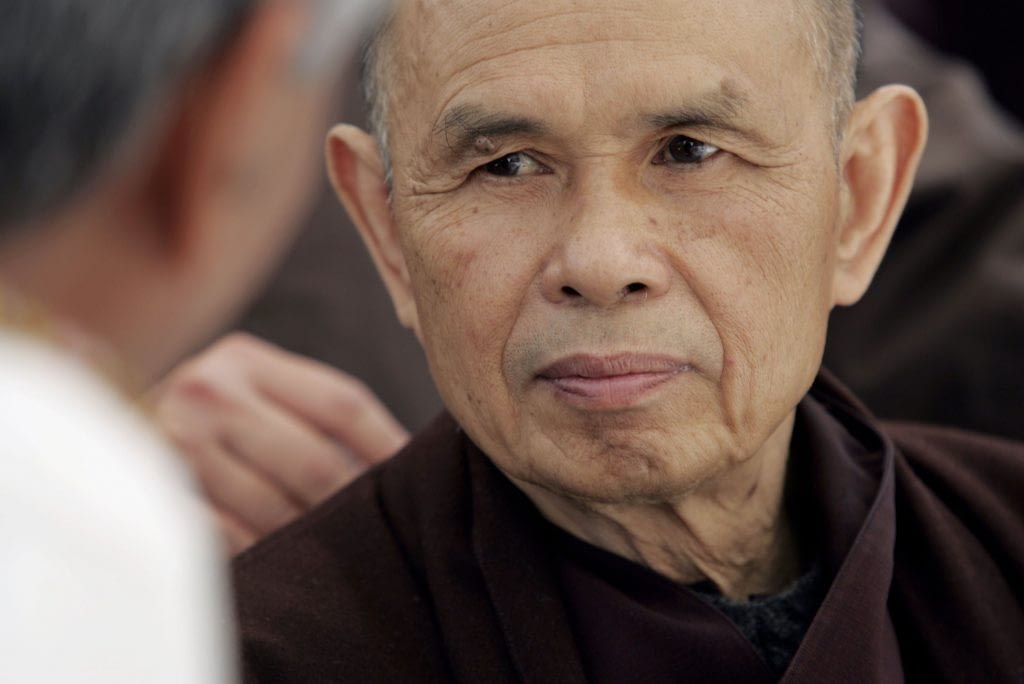
But according to the Zen Buddhist Master, Thich Nhat Hanh, not only are these ideas of happiness wrong, but they could be adversely impacting our lives.

In a simple, but profound passage in his book, The Art of Power, Thich Nhat Hanh explains what true happiness is and how you can go about finding it:

 “Many people think excitement is happiness…. But when you are excited you are not peaceful. True happiness is based on peace.”Thich Nhat Hanh says that to be peaceful, we need to accept our true selves. Yet, in western society, we often try to change who we are to please other people.
However, this is futile to our own inner peace and happiness:

“To be beautiful means to be yourself.You don’t need to be accepted by others. You need to accept yourself. When you are born a lotus flower, be a beautiful lotus flower, don’t try to be a magnolia flower. If you crave acceptance and recognition and try to change yourself to fit what other people want you to be, you will suffer all your life. True happiness and true power lie in understanding yourself, accepting yourself, having confidence in yourself.”

So, the question is:
How can we learn to accept ourselves?
Thich Nhat Hanh says that it’s all about embracing the present moment and the beautiful miracles that exist around us:

“When we are mindful, deeply in touch with the present moment, our understanding of what is going on deepens, and we begin to be filled with acceptance, joy, peace and love…Around us, life bursts with miracles–a glass of water, a ray of sunshine, a leaf, a caterpillar, a flower, laughter, raindrops. If you live in awareness, it is easy to see miracles everywhere. Each human being is a multiplicity of miracles. Eyes that see thousands of colors, shapes, and forms; ears that hear a bee flying or a thunderclap; a brain that ponders a speck of dust as easily as the entire cosmos; a heart that beats in rhythm with the heartbeat of all beings. When we are tired and feel discouraged by life’s daily struggles, we may not notice these miracles, but they are always there.”

While you might think this implies we should never think about the past or the future, Thich Nhat Hanh clarifies that it’s important to reflect on the past and plan for the future, but in a helpful way:

“To dwell in the here and now does not mean you never think about the past or responsibly plan for the future. The idea is simply not to allow yourself to get lost in regrets about the past or worries about the future. If you are firmly grounded in the present moment, the past can be an object of inquiry, the object of your mindfulness and concentration. You can attain many insights by looking into the past. But you are still grounded in the present moment.”

This all makes perfect sense: Happiness is found in the present moment and learning to accept it.
I think we intrinsically understand this. However, what most of us really struggle with (particularly in western culture) is training our mind to live in the present moment.

Most of us don’t have control over our mind’s ability to jump from distraction to daydreaming and back again.

So, what can we do here?
According to Zen Master Thich Nhat Hanh, one of the best ways to train the mind is through meditation.
Thich Nhat Hanh mentions the most simple and basic meditation technique that we can practice called “mindful breathing”.

Not only is this meditation technique the most simple, but it is also the most useful. You can practice this anywhere, anytime, even for 15 seconds.

Here is Thich Nhat Thanh explaining how to go about it:
NEW QUIZ: What’s your spiritual archetype? At the heart of everything you do, think, and feel is your spiritual archetype. Take this quiz to find out yours.

“Please, when you breathe in, do not make an effort of breathing in. You just allow yourself to breathe in. Even if you don’t breathe in it will breathe in by itself. So don’t say, “My breath, come, so that I tell you how to do.” Don’t try to force anything, don’t try to intervene, just allow the breathing in to take place….”
“What you have to do is be aware of the fact that the breathing in is taking place. And you have more chance to enjoy your in-breath. Don’t struggle with your breath, that is what I recommend. Realize that your in breath is a wonder. When someone is dead, no matter what we do, the person will not breathe in again. So we are breathing in, that is a wonderful thing….”
​
“This is the first recommendation on breathing that the Buddha made: When breathing in, I know this is the in-breath. When breathing out, I know this is the out-breath. When the in-breath is long, I know it is long. When it is short, I know it is short. Just recognition, mere recognition, simple recognition of the presence of the in-breath and out-breath. When you do that, suddenly you become entirely present. What a miracle, because to meditate means to be there. To be there with yourself, to be there with your in‑breath.”

How to Create a Balanced Life: 9 Tips to Feel Calm and Grounded
By Jasmin Tanjeloff

“Happiness is not a matter of intensity but of balance, order, rhythm and harmony.” ~Thomas Merton

As a Libra, my sign is the scale, which signifies balance. I’m not sure how much my “signage” plays into my desire to live a balanced life, but I do know that the more balanced I feel, the more free I feel.

In my work I am often reminded that what works for some people does not necessarily work for others; and that one person’s idea of balance may not constitute anything remotely balanced from another person’s perspective.

So I wanted to address the various elements of life that can require balancing and offer some suggestions to find the mix that works best for you.

To start, what does it mean to be balanced?
To me, it means that you have a handle on the the various elements in your life and don’t feel that your heart or mind are being pulled too hard in any direction. More often than not, you feel calm, grounded, clear-headed, and motivated.

How do you find your balance?
The elements in life that require the most balancing can be divided into two categories: internal and external. Oftentimes, people focus on one more than the other.

For example, you may find that you focus on external things, like work, relationships, and activities, and that you pay very little attention to what is going on inside your heart and mind.

On the other hand, you may find that you spend so much time being self reflective that you sometimes miss out on the experience of living.

Other people may be fairly balanced between the two but might want to balance out some specific elements within each category; so I created this little outline to help us better understand the beneficial components on both ends of each spectrum.

Internal (Mind, Heart, Health)
  • Mind: Challenging yourself intellectually vs. creating opportunities for your mind to rest
  • Heart: Giving love vs. receiving love
  • Health: Eating, drinking, exercising properly vs. resting and treating yourself to some extra yummies
External (Work, Social, Family, Fun)
  • Work: Pushing yourself to achieve goals vs. seeing the bigger picture and enjoying the ride
  • Social: Satisfying your social desires vs. taking time for yourself
  • Family: Fulfilling your familial responsibilities vs. creating healthy boundaries
  • Fun: Allocating time for things you enjoy doing vs. making sure you don’t overdo it
As you can see, both ends of each spectrum are actually positive; but if either side is taken to an extreme, something that is intended to be positive can end up being detrimental.

It’s helpful to check in with yourself to see if you feel balanced.

If you feel pulled in any one direction and uneasy about it, these steps may help you get your life aligned:

1. Acknowledge.
Take some time to really look at your life, your state of mind, and how you’re feeling. Be honest with yourself and notice the areas of your life that you’re neglecting.

2. Examine.
Notice if you’re leaning more toward an internal or external focus, or if there are areas within each category that you would like to be more balanced.

3. Set Goals.
Look at the outline to help you decide which ways you want to balance your life. Make a list.

4. Plan Tasks.
Make a list of daily, weekly, and monthly tasks that you will need to do to achieve each of these goals. What have you tried in the past? Did it work? If not, what can you do differently?

5. Reflect.
What is the most important thing you’ve accomplished in the past? How did you stay focused toward this goal? How did you handle your fears, doubts, anxieties, worries, and negative self-talk? How does it feel to know that you accomplished the goal in spite of these parts of yourself?

6. Prepare.
What is your inner “stuff” that will try to keep you from sticking to your plan (fears, worries, doubts, negative self talk)? Can you specify the things you will say to yourself to push you off track? (For example: “Just one more bite, I’ll start eating better tomorrow”) Make a list.

7. Empower.
What do you need to remember in those times? What are things you can say to that self-sabotaging part of yourself? Be kind to yourself. Balance won’t feel good if you’re cruel to yourself in creating it!

8. Connect.
Is there a person or a tactic you can use to keep yourself supported, motivated, and focused in those hard times? I highly recommend connecting and sharing your inner process with someone. Find someone who can help you challenge your inner demons, and celebrate your little accomplishments.

9. Plan.
Just like accomplishing any goal in life, it takes time and effort to overcome your habitual patterns and create new ones. If you stay on track with this detailed and intentional process for three whole months, then there is a good chance you will create new habits to enjoy a more balanced life going forward!

How To Lead a Well-Balanced Life
By Diana Rodriguez | Medically reviewed by Pat F. Bass III, MD, MPH

Everyone longs to be healthy and happy. After all, what's the point in working hard toward a long and healthy life if you can't enjoy it? While focusing on a healthy lifestyle by exercising and eating right is great for your body, balanced living means protecting your mental and emotional health, too. And stress reduction needs to be at the top of your to-do list.

Balanced Living: Making the Commitment

Balanced living means considering all aspects of your life: relationships, work, fitness and health, and emotional well-being.

We all get bogged down with work and family responsibilities from time to time, but making time for yourself is necessary so that you can keep up with all your responsibilities. All batteries get run down, even yours. So recharge your body physically and mentally and make the commitment to enjoy some “you time” every day.

Balanced Living: Boosting Happiness and Creativity

Being happy gives you a better outlook on life, so you're more prepared to tackle your tasks. Stress, on the other hand, can keep you from enjoying life and can have a negative impact on your health. Research also has shown that stress can stifle creativity.

Make time to take care of yourself and indulge in creative outlets you enjoy to help with stress reduction:

  • Schedule time each week to allow yourself to de-stress, and spend a few minutes on relaxation each day.
  • Get up a few minutes early in the morning to savor a cup of coffee and some quiet time before everyone else wakes up.
  • Make daily activities more fun — try a new ethnic recipe for dinner, take a long aromatherapy soak instead of a quick shower, or listen to new music or learn a new language while you commute to work.
  • Devote time each week to a hobby you love or to learning a new one you’ve always wanted to try; art classes in particular are stimulating and rewarding.
  • Instead of just sitting at your desk and gobbling down lunch while you keep working, spend your lunch hour doing things you enjoy, like going for a walk, taking an exercise break, or reading a book.
  • Don’t forget to laugh. It’s great for your health and can help:
    • Alleviate stress
    • Fight off infections
    • Boost brain health
    • Lower blood pressure
    • Improve your mood
Balanced Living: Enjoying Exercise for Good Health

Exercise isn't something you should force yourself to do, or you won’t be likely to stick with. Do something that you like and look forward to doing, instead of another chore that you'll be tempted to skip. Remember that exercise plays a huge role in stress reduction, so make time and motivate yourself for exercise by:

  • Making a good long workout part of your weekend plans. Hit the gym or plan a fun activity — go for a hike, bike ride, or play a game of golf or tennis.
  • Sneaking in some exercise on your lunch hour at work, or get up earlier and work out before you start your day.
  • Scheduling appointments for exercise just like you do other important tasks; commit the plan to paper so you'll be more motivated to stick with it.
Balanced Living: Making Time to Eat Right

The right diet will keep your body healthy, give you energy, and boost your spirits. Healthy food can be delicious, and it's fun learning new recipes and healthy combinations. Also, healthy cooking doesn't have to be time-consuming:

  • Scour the Internet for heart-healthy recipes, or buy a cookbook focused on quick and tasty cuisine.
  • Buy fresh, ready-to-eat fruits and vegetables so that you can grab them on the go.
  • Plan your healthy menu for the week ahead and buy all the groceries that you’ll need; having a system will help you resist the temptation to call the pizza delivery guy.
Everything in moderation is a phrase you hear often, and with good reason. Everything in moderation means that there's a healthy balance to your life, so laugh, love, live, and be healthy.

Learn more about balance.
Last Updated: 5/20/2009

HOW TO LIVE A BALANCED LIFE 
By Alex Blackwell on Apr 02, 2009

- See more at: http://www.thebridgemaker.com/how-to-live-a-balanced-life/#sthash.voyKM3Xa.dpuf

We have overstretched our personal boundaries and forgotten that true happiness comes from living an authentic life fueled with a sense of purpose and balance. – Dr. Kathleen Hall

There’s no question we want great things for ourselves and for our loved ones. However, many of us are stuck without knowing how to create the life we want. We regret the fact we sometimes have to live paycheck-to-paycheck; or our relationships are not as satisfying as we want them to be; or our lives are simply not balanced and we are not going in the direction we had hoped.

Some believe the notion of a truly balanced life is only a myth. With too much to do and with too little time to do it, anxiety and stress replaces happiness much of the time. However, there is hope, because the ability to change our lives exists in all of us. We just need to learn how to become more balanced.

Living a balanced life is the ability to take all that life throws at us from our careers, home, health and everything else, and put it in a central location so we can reframe it in order to better understand it, learn from it and grow from it.

The following life balance strategies provide a roadmap; a handbook of sorts, to begin the process of living a balanced life each day.

Create a VisionBefore you start, you ought to know where you want to go. The lack of not having a plan is what keeps some folks from creating the life they want because they have no idea what they want in the first place.

A life vision is not an etched in stone deal that can never be changed; but rather, it is a high-level vision statement that goes something like, “this is what I want from my life.”

For me, I want to meet, or exceed, the financial and emotional needs of my family. I want to be in control of my future and give myself the ability to have choices with my career. I may not achieve all of these things every single day, but this vision is what gives me focus and a very good idea of what a balanced life looks, and feels like, when I’m struggling and veering off course.

Identify Your GoalsYour life’s vision is what provides governance to how you want to live; your goals are the tactical components of your vision. Your goals help make your vision a reality. For the most part, goals are measureable and quantifiable.

Goals can vary in size and scope. One goal might be to retire at age 50 in order to begin living your life’s passion and another might be to find one evening during the week when you and your partner can go out and spend some time alone.

Often, our lives feel out of balanced when we have not clearly defined our goals or we are not actively pursuing them. Take time each week; each day, to consider what you want to accomplish. Make a plan to align your activities to your life’s vision.

Prioritize Do what’s important first. The distractions of email, text messages, and mind-numbing television can keep us from focusing on what is truly important.

In order to spend time on activities that support you life’s vision and will keep you daily life in better balance, consider these productivity tips:

  • Have at least one hour of email amnesty each day at work, or try to shut-off your email one day each week.
  • Get up at least 15 minutes earlier each day to give yourself a better head-start and use this time to make your plan for the day.
  • Make a list – mental is fine, but written is better, of the things you need to accomplish and the things you want to accomplish for the day.
  • Be on the outlook for time-killers such as planting yourself in front of the television or thinking of who to call next on the telephone instead of addressing the items on your to-do list.
  • Know what you value most in life and then spend more time there.

Five Golden Minutes
Take five minutes each day and consider what worked for you and what didn’t. Look at the things that made you feel successful and happy compared to those that contributed to anxiety and stress.


Look for patterns. Living a balanced life is about identifying and doing more of what’s working and less of what is not. Stop and think if your actions and thoughts support your vision and goals. Nurture the ones that are effective and adjust the ones which are counterproductive.

Pay Attention to Your Body
If you are feeling fatigue and worn down at the end of the day, or find it difficult to get up in the morning, these are signs you are doing too much. Persistent headaches, constipation, and sexual dysfunctional are all warning signs your body, and your life, are out of balance.


Your body is an excellent sounding board. It will tell you a lot about the quality of your life if you choose to listen.

Ask for Feedback and Help
I’m not sure any body has everything figured out. Asking for feedback is not a sign of weakness – it’s a sign of resolve and determination. It shows a commitment to wanting to improve your life and for learning how to balance everything thrown at you.


Reach out to those who have experienced what you are experiencing and seek their guidance. When you don’t know how to do something, it’s OK to ask.

Make Adjustments
Stuff happens. Sometimes we are thrown a curveball when we are expecting a fastball.


My son, Andrew, plays baseball for his high school team. There are times when he is down in the count no balls and two strikes. This is the time the pitcher usually throws some junk, either an off-speed pitch or a curveball. Andrew takes his hands all of the way back and waits. But instead, a fastball comes.

In less than an tenth of a second he has to make the important adjustment to try to throw his hands at the pitch and see what happens. Sometimes he is successful, often times he is not, but he still commits to making the adjustment. There is a good lesson here for the rest of us.

We can think something is expected to happen, and then unexpectedly, something else happens instead. Life is dynamic. Yes, it’s good to have a plan, but a big part of any plan is the contingency plan that stands right behind it. Having a good back-up plan can help us keep our balance when we see the fastballs coming.

Rest and Relax
​Taking a time-out now and then isn’t a luxury as much as it is a necessity. It’s important to take a step back and process everything going on in your life. Your vision can be a lot clearer when you are not so close to the situation.


Rest your body and a sharper mind will follow. Use your new-found energy and clearer thinking to help you keep your balance as you navigate through some rough waters. Solid footing is always close by. We just have to be mindful we need its stability from time to time.


Comments are closed.
Powered by Create your own unique website with customizable templates.
